Mindset· 13 min read
Always Performing? What Masking Costs and What Helps

Always Performing? What Masking Costs and What Helps
You drove home from a work event where nothing went wrong. The conversation flowed, people laughed at the right moments, and you said nothing you regret. And yet you walked through your front door feeling like you'd just run a double shift at a job you never applied for.
That tiredness is hard to explain because the obvious explanations don't fit. You're not someone who hates people. Nothing bad happened. The exhaustion arrived without a cause you can name — but there may be a specific mechanism behind it. Researchers call it social masking, and what it costs has been studied more carefully in recent years than most people realize.
What Social Masking Actually Is
"Masking" entered mainstream conversation largely through research on autistic people. A 2017 study by Hull and colleagues in the Journal of Autism and Developmental Disorders described "camouflaging" as the practice of concealing autistic traits in order to appear more neurotypical in social settings. Participants in that qualitative study of 92 autistic adults described exhaustion among the consequences. A 2019 survey of 262 autistic adults by Cage and Troxell-Whitman, published in the same journal, found that camouflaging across many settings was associated with more anxiety and stress.
One important caveat before going further: most of that research focused specifically on autistic and neurodivergent people. The effects in the general population are likely different and probably smaller. The studies are also largely self-report and cross-sectional, which means the causal arrows aren't cleanly settled. What the research documents is a correlation, not a proof of mechanism.
Still, the underlying behavior — monitoring yourself through an imagined observer's eyes and adjusting your presentation in real time — is something most people do to varying degrees. You soften an opinion in a meeting. You modulate your tone on a professional call. You don't bring up the thing you're actually most interested in because it doesn't quite fit the mood of the table.
Researchers have documented similar dynamics in a range of other contexts: LGBTQ+ people navigating environments where acceptance is uncertain, first-generation professionals learning an unwritten social vocabulary, people from underrepresented backgrounds in workplaces where fitting in requires constant micro-adjustments. The specifics differ considerably. The core structure — monitoring continuously and concealing selectively — is consistent enough across situations to be worth naming.
Kernis and Goldman, in a 2006 review in Advances in Experimental Social Psychology, defined authenticity as having four components: awareness of your own emotions and motives, unbiased processing of information about yourself, behavioral consistency across contexts, and relational transparency — being genuinely open with people in close relationships where that's appropriate. Sustained self-concealment sits counter to all four.
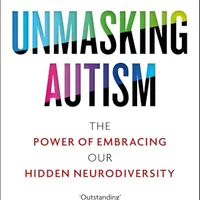
Unmasking Autism — Devon Price
As an Amazon Associate, we earn from qualifying purchases — at no extra cost to you.
The Cost Nobody Names Precisely
The energy drain from masking is difficult to identify because nothing goes wrong. The event didn't fall apart. You didn't say anything you regret. The exhaustion arrives without a clear cause, which makes it easy to attribute to the wrong thing — introversion, low blood sugar, a poor night's sleep.
What may be happening looks like divided attention. You're running two concurrent processes: the conversation itself, plus a background loop asking whether you're being too much right now, too direct, too informal, not formal enough. That second loop is nearly invisible from the inside. It doesn't feel like work. It's a plausible explanation, though not a proven one: the monitoring process doesn't announce itself as effort until it stops.
Whether the same cost shows up outside the autism research is less well established. Authenticity research relies heavily on self-report and correlation, so treat the idea that constant self-editing is tiring as a hypothesis worth testing against your own experience, not a settled mechanism.

Sony WH-1000XM5 Noise Cancelling Headphones
As an Amazon Associate, we earn from qualifying purchases — at no extra cost to you.
Why Stopping Isn't Simple
Most writing on authenticity implies you should just be more yourself. That advice ignores a lot of real context.
If you're the only person from your background in a room, adapting your presentation is often a safety behavior, not a character flaw. If you're neurodivergent in a neurotypical workplace, adjusting certain surface behaviors can open real doors. In Cage and Troxell-Whitman's survey, autistic adults most often gave "fitting in" and avoiding bullying or retaliation as their reasons for camouflaging, while camouflaging across many settings correlated with more anxiety and stress. Both things are simultaneously true.
Authenticity researchers draw a distinction between contextual adaptation — adjusting your behavior to suit a situation while your core values remain intact — and suppression, which means consistently concealing parts of your identity or genuine perspective because you believe they'll be rejected. The first is social skill. The second is the specific thing that depletes you over time.
A concrete way to hold the distinction: an engineer who uses more formal language in a client meeting but still voices their actual technical assessment is adapting. The same engineer who consistently softens, qualifies, or simply withholds their judgment because they've learned the room doesn't welcome disagreement — that's suppression. The vocabulary may be equally restrained in both cases. The cost is not.
The useful framing is narrower than "adapt or don't": which contexts do you still have where adaptation isn't required?
Authenticity isn't a binary. It's a calibration — more yourself in more contexts, over time, while being honest about which adaptations are genuinely useful and which are just fear wearing the costume of pragmatism.
The Relationship That Resets the System
In Kernis and Goldman's framework, relational transparency — being genuinely open with people in close relationships — is one of the four core components of authentic living. The research doesn't directly show that a few unfiltered relationships offset the cost of performing elsewhere, but it's a reasonable inference from that framework.
Think of it less as philosophy and more as recovery logic. If every interaction requires active self-monitoring, there's nowhere for the system to decompress. You're running the background process continuously with no scheduled downtime.
It doesn't require a relationship of deep mutual disclosure. It just needs to be one where you're not managing your professional image, your social ease, or your perceived status — where you can say what you actually think and have it received without consequence.
The useful question isn't how to become more authentic everywhere at once. That framing usually produces either recklessness or paralysis. The useful question is: who are the one or two people in your life with whom you're genuinely unfiltered? If that number is currently zero, building one such relationship is probably worth more than most other self-development efforts you could make this year.

The Good Life — Robert Waldinger & Marc Schulz
As an Amazon Associate, we earn from qualifying purchases — at no extra cost to you.
The people you're around most shape which version of you gets practiced — and you gradually become whoever gets the most rehearsal.
How to Start This Week
If the idea that self-monitoring is expensive rings true for you, the practical question isn't how to stop completely — it's how to carve out space in your existing life where the process gets to switch off. A few specific starting points:
-
Audit your energy for three days. After each significant interaction, note how depleted you feel, roughly. A note in your phone is enough. You're not building a data set; you're looking for patterns. Certain contexts will drain you consistently, others almost never. That pattern tells you more than any personality framework can.
-
Get a journal with no method attached. Not a productivity template, not a gratitude grid. Something blank. Writing in an unedited voice — not for an audience, not even for a future version of yourself — can be a low-stakes place to stop editing yourself. James Pennebaker's research on expressive writing, summarized in meta-analyses such as Smyth (1998) in the Journal of Consulting and Clinical Psychology, found modest health benefits in healthy samples, though the effects vary widely across studies and later randomized trials produced smaller effect sizes.
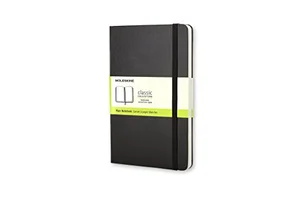
Moleskine Classic Notebook, Large, Plain, Black, Hard Cover
As an Amazon Associate, we earn from qualifying purchases — at no extra cost to you.
- Design one context where you practice not managing yourself. A weekly call with a close friend where you've agreed to say what you actually think. A creative hobby where nobody knows your job title. A solo walk without your phone. The behavior of being unfiltered responds to deliberate context-building, just like any other habit.

Liforme Original Yoga Mat
As an Amazon Associate, we earn from qualifying purchases — at no extra cost to you.
- Identify the context that costs you most. Work, family, a particular social group. Then honestly ask whether what you're getting from that context — the professional outcome, the belonging, the sense of fit — is proportionate to the energy it requires. Sometimes it is. Sometimes the math stops making sense once you look at it directly.
how to build better daily habits
If what you're experiencing sounds more significant than ordinary social fatigue — a persistent sense of playing a role rather than living your life, exhaustion after any social interaction regardless of context — that's worth a conversation with a mental health professional. This article is a frame for thinking, not a substitute for that.

Kindle Paperwhite (12th Gen, 16GB)
As an Amazon Associate, we earn from qualifying purchases — at no extra cost to you.
"Design Your Evolution" doesn't mean redesigning yourself into someone unrecognizable. It means getting deliberate about what you're actually building: which version of you gets the most practice, in which rooms, with which people.
Masking isn't usually a choice you made consciously. It developed when you were young and learned which parts of you made a room more comfortable. Becoming more yourself doesn't require a dramatic reversal. It requires noticing, over time, which performances are worth the cost — and deliberately designing a few spaces where the performance stops.
Which context costs you the most energy right now — and is what you're getting from it actually worth the price?
self-awareness exercises that actually work
Was this helpful?