Mindset· 12 min read
Overconfidence: How Sure Are You, Really?
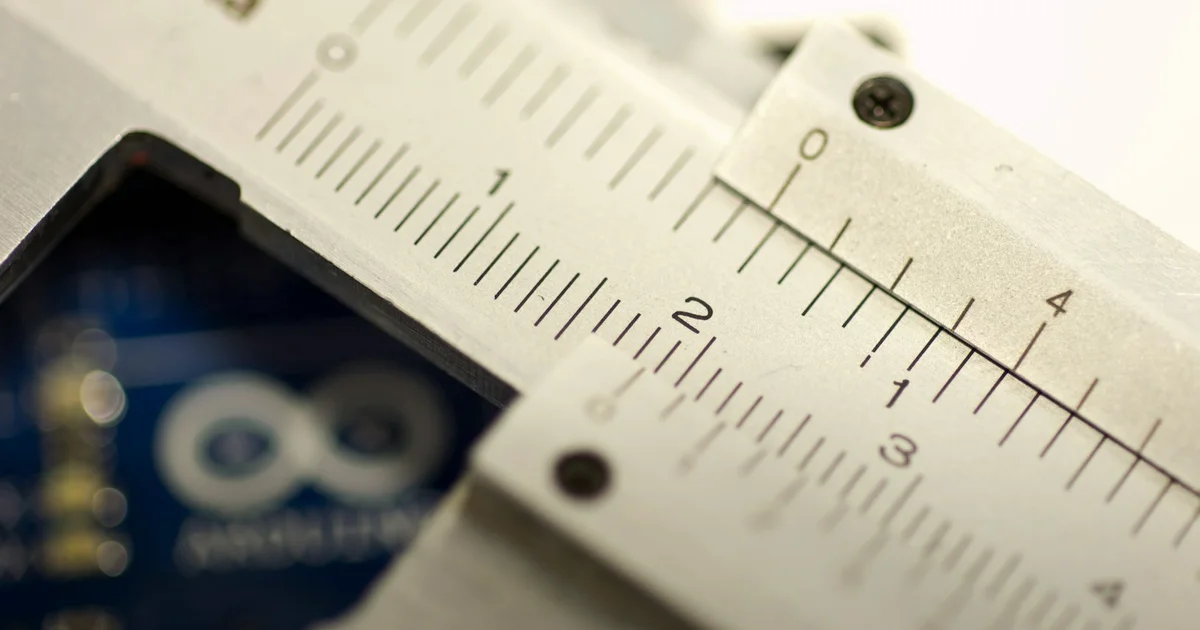
Overconfidence: How Sure Are You, Really?
You were absolutely certain it would take three hours. It took seven.
You were confident the client would say yes. They said no. You told your friend the restaurant closes at ten. It closed at nine. Small things, individually. But stack them up across a year and you start to see a pattern: you're consistently more certain than the facts turn out to warrant.
This isn't a character flaw. It's one of the most reliably documented patterns in the science of human judgment, and it has a precise name: overconfidence. More interesting than the label is the mechanism — and the fact that you can actually measure your own version of it with nothing more than a notebook.
Understanding overconfidence doesn't mean doubting everything you think. It means learning where your confidence is well-placed and where it runs ahead of the evidence. That gap, once you can see it, is one of the most useful things you'll ever notice about yourself.
The Three Faces of Overconfidence
In a 2008 paper in Psychological Review, psychologists Don Moore and Paul Healy drew a distinction that most people — even those who study this stuff — tend to conflate. Overconfidence, they argued, isn't one thing. It's three.
The first is overestimation: thinking your performance will be better than it turns out to be. Students predict higher test scores than they receive. Entrepreneurs forecast earlier profitability than they achieve. The version of yourself you imagine handling a project is nearly always more competent than the one who actually shows up.
The second is overplacement: thinking you're better than other people at something. In Ola Svenson's classic 1981 study, about 93% of American drivers rated their driving skill as above the median. In Patricia Cross's 1977 survey, more than 90% of college faculty rated themselves as above-average teachers. The math doesn't work, but the feeling persists.
The third — and probably the most quietly damaging — is overprecision: being more certain about the accuracy of your beliefs than the evidence supports. This one is insidious because it operates in territory where you've already decided. You're not wondering if you're right. You already know.
Moore and Healy also found that these types don't always travel together. On hard tasks, people tend to overestimate their performance while believing they're worse than others; on easy tasks, the pattern flips: they underestimate their performance but place themselves above others. Overprecision is more persistent than the other two, which is part of why it's the most costly type to carry into real decisions.
Thinking, Fast and Slow — Daniel Kahneman
As an Amazon Associate, we earn from qualifying purchases — at no extra cost to you.
Why Your Gut Feels More Certain Than It Should
Your brain isn't designed for calibration. It's designed for speed.
When you form a belief or make a prediction, you're drawing on years of accumulated patterns. That system is fast, efficient, and right often enough that you rarely receive clear feedback telling you to second-guess it. The bigger problem is selective memory: you tend to remember your accurate predictions more vividly than your misses, which builds a quietly inflated sense of your own track record.
Then there's the feedback problem. If you make a confident prediction about something that resolves in five years, you won't easily connect the outcome back to your original confidence level. The feedback is too distant to update you in real time.
Research on calibration — the technical term for how closely your stated confidence matches your actual accuracy — shows this gap is systematic. In the research reviewed by Lichtenstein, Fischhoff, and Phillips in 1982, people who say they're "99% sure" of a factual answer turn out to be wrong far more often than 1% of the time. Stated confidence consistently outruns accuracy.
This is sometimes called the "hard-easy effect." On genuinely difficult questions, people tend to overestimate their accuracy. On easy questions, they sometimes underestimate. The overconfidence on hard tasks is the more costly pattern — and it's the more common one in real decision-making, where you rarely get to choose only the easy questions.
cognitive biases that affect productivity
What Superforecasters Do Differently
Philip Tetlock spent years running large-scale forecasting tournaments, and what he found challenged a widely held assumption about expertise. Domain experts — people recognized by their institutions as authorities on a topic — often did little better than chance at predicting political and economic events. The problem wasn't a lack of knowledge. It was the way they held their confidence.
But a small group of forecasters beat the field consistently, year after year. These "superforecasters," documented in the book Superforecasting: The Art and Science of Prediction (Tetlock and Dan Gardner, 2015), weren't necessarily smarter or more credentialed than the experts. What distinguished them was a mental habit: they treated confidence as a number to update, not a position to defend.
A superforecaster doesn't say "this will happen" or "this won't happen." They say "I put this at 63%, and here's what new information would move that number." They keep records of their predictions, revisit the outcomes, and look for systematic patterns in where they overshoot or undershoot. When the evidence shifts, they update quickly — without the face-saving delays that slow most people down.
Tetlock coined the word "superforecasters" for this group not because they were superhuman, but because they were methodical. They made their reasoning explicit enough to examine it, which is exactly what most people skip.
Superforecasting: The Art and Science of Prediction — Philip Tetlock & Dan Gardner
As an Amazon Associate, we earn from qualifying purchases — at no extra cost to you.
The insight here isn't that superforecasters have better access to information. It's that they've built better feedback loops. That's replicable.
The Prediction Log: A Practical Calibration Tool
Most people have no systematic record of what they predicted versus what actually happened. You remember a few dramatic right calls and a few embarrassing misses. The rest disappears. The overall pattern — how accurate you really are at the confidence levels you typically use — is simply invisible to you.
A prediction log makes it visible. It doesn't need to be elaborate. A notepad on your desk, a column in a spreadsheet, or a dedicated notebook — whatever you'll actually use consistently.
The practice is straightforward. When you make a real prediction — about a timeline, a conversation outcome, whether a particular strategy will work — you write it down with a confidence level attached. Something like: "I think the proposal will be approved. Confidence: 75%." When the outcome arrives, you record it.
Over weeks and months, you accumulate something rare: your personal calibration score. If predictions you rate at 75% come true about 75% of the time, your confidence is well-calibrated. If they come true only half the time, your 75% is functionally a 50%, and you've been systematically misleading yourself.
Many people who run this exercise find surprises. High-confidence predictions may turn out to be right less often than expected, and a few moderate-confidence calls may land better than the high ones. Your log will show you where your own gaps are.
How to Start Today
You don't need special software or a complicated system. You need a place to write things down before you know how they'll resolve.
Step 1: Choose a time frame that closes quickly. Start with predictions that will resolve in one to four weeks — project timelines, meeting outcomes, a colleague's reaction to feedback. Predictions that take years to settle are too slow to teach you anything yet.
Step 2: Write the prediction and your confidence level before the outcome is known. This step is non-negotiable. Memory rewrites history toward whatever happened. A dedicated notebook works well here.
Clever Fox Habit Calendar Circle (24-Month)
As an Amazon Associate, we earn from qualifying purchases — at no extra cost to you.
Step 3: Review at the end of each month. Look at every prediction you rated at 70% confidence or above. Count how many were correct. If it's consistently below 60%, your high-confidence judgments are running too hot.
Step 4: Find your domain-specific patterns. Calibration isn't universal. You might be accurate about your own work output and systematically overconfident about how other people will respond. Knowing which domains inflate your confidence lets you apply deliberate skepticism where the evidence says you need it.
Step 5: Adjust downward deliberately. If your log shows you tend to overshoot, try reducing your stated confidence by ten percentage points until the data stabilizes. It feels strange at first.
decision-making and mental models
That strangeness is the gap closing.
The Bigger Picture
Overconfidence isn't a flaw that belongs to arrogant or careless people. The research is clear: it appears across industries, experience levels, and educational backgrounds. Experts and novices alike show it. The careful and the reckless both carry it.
What it is, is a mismatch between your internal sense of certainty and the external accuracy of your beliefs. And mismatches can be redesigned.
The superforecasters Tetlock studied didn't become more uncertain about the world. They became more accurate about it. There's a difference. One is a feeling. The other is a track record you can actually build and measure.
If you start a prediction log this week and review it thirty days from now, you'll have something most people never accumulate: real data on how well your confidence serves your judgment. Not to make you more doubtful. To make you more trustworthy — to yourself first, and to anyone who has to act on your calls.

Kindle Paperwhite (2024, 16GB)
As an Amazon Associate, we earn from qualifying purchases — at no extra cost to you.
That's the kind of design Vanulos is after. Not rebuilding yourself from scratch, but closing the gap between who you think you are and who the evidence shows you to be. One logged prediction at a time.
What's one call you've been carrying with high confidence that you've never actually gone back and checked?
Was this helpful?