Productivity· 12 min read
Retrieval Practice: Why Testing Yourself Beats Rereading
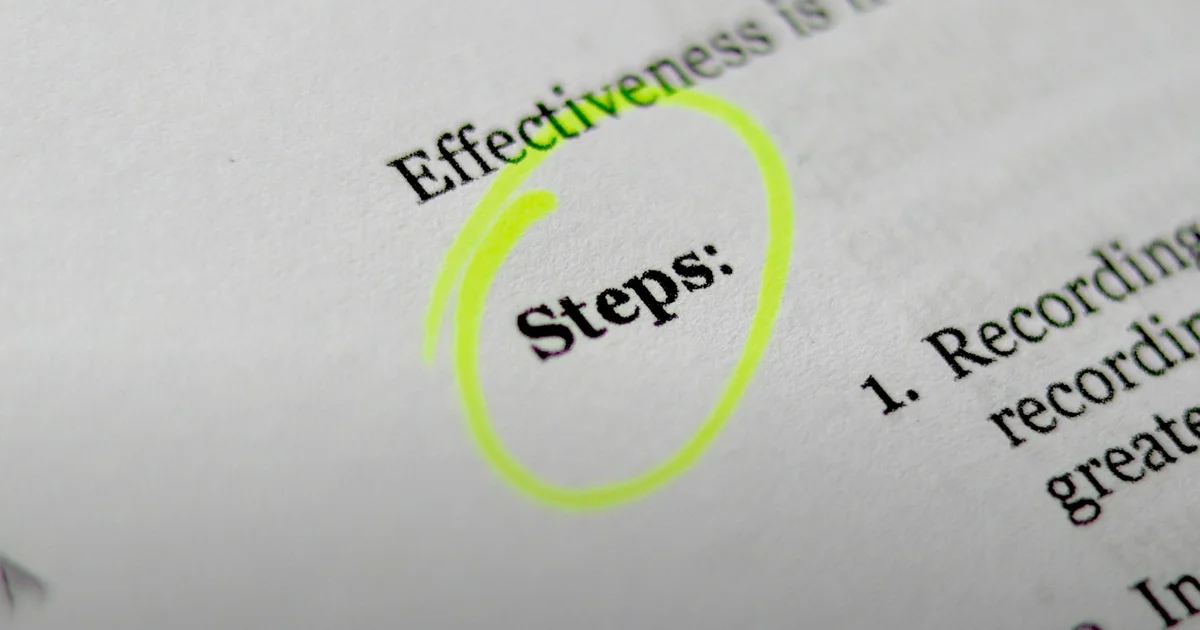
Retrieval Practice: Why Testing Yourself Beats Rereading
You read the chapter twice. Highlighted half of it. Went back a third time with a notebook, writing down what felt like the key ideas.
A week later, someone asks you to explain the concept.
Blank.
Not fuzzy — blank, as though the information had passed through you without leaving a trace. This isn't a memory problem or a concentration problem. It's a method problem. The approach most people use by default — rereading, re-highlighting, re-noting — is, according to cognitive psychology research, one of the least effective ways to build lasting knowledge.
Cognitive psychologists have a name for what rereading produces: the fluency illusion. When you re-encounter something you've already read, the words feel familiar. That familiarity registers in your brain as knowing. It isn't. What you're experiencing is recognition — which is a fundamentally different thing from retrieval. You can recognise every sentence on a page and still be completely unable to reconstruct the idea from memory five minutes after you close the book.
Reading is a skill. Remembering what you read is a different skill, and it doesn't come from reading more carefully or more slowly, or from using a better highlighter. It comes from a specific technique — one that is counter-intuitive, slightly uncomfortable, and backed by some of the most consistent findings in educational psychology.
That technique is testing yourself.
Retrieval practice is any learning activity that requires you to generate a response from memory rather than passively re-read a source — writing out what you remember after closing a book, completing practice questions, or explaining a concept aloud from scratch. The defining feature is production: not recognition, but reconstruction.
Why Testing Yourself Changes What You Remember
In 2006, Henry Roediger and Jeffrey Karpicke published a study in Psychological Science that opened a productive argument about how people learn. They gave students prose passages to study. One group read a passage repeatedly across four study sessions. The other group read it once, then spent the remaining sessions doing a single task: writing down everything they could recall from the passage, without looking at the text.
After a week, the retrieval group remembered roughly 50 per cent more than the rereading group — about 61 per cent of the passage against roughly 40 per cent. Later research has repeatedly found testing benefits for long-term retention.
Here's the part that makes the finding uncomfortable: at a short delay of five minutes, the rereaders actually did better, and they felt more confident. They expected to perform better over the long run too. They were wrong. The method that felt harder, that produced more uncertainty in the moment, produced significantly stronger memory over time.
Dunlosky and colleagues mapped this more systematically in a 2013 review published in Psychological Science in the Public Interest, evaluating ten common study techniques against the evidence. Practice testing was rated "high utility" — one of only two methods to earn that rating, alongside distributed practice. Rereading and highlighting both received "low utility" ratings. The gap between what learners believe works and what the evidence shows works turned out to be substantial.
Worth noting: most of this research involved students learning factual material — prose passages, vocabulary, science content. The effects are clearest for knowledge that can be directly tested with a question. For complex skill-building or creative work, retrieval practice is one strong tool among several, not the whole answer. But for anyone who reads to retain information — which describes most people, most of the time — the case is consistent enough to act on.
The Illusion That Rereading Creates
Here's the mechanism behind the fluency illusion.
When you encounter a familiar idea, it is processed more easily. Your brain interprets that ease as a signal of knowledge — the same way reading in your native language feels effortless because the patterns are established. This is a useful heuristic in most areas of life. As feedback about whether you've actually learned something, it's quietly misleading.
Highlighting compounds the problem. The moment you draw a line under something, it can feel like a decision has been made: this is handled. That sense of completion is premature. You've marked the information. You haven't processed it. The Dunlosky review found that highlighting produced inconsistent gains in student performance — yet it persists as a default study method partly because it looks like work. The page fills with colour. The sense of progress is real. The learning often isn't.
Psychologists call this the "illusion of knowing" — a metacognitive error where familiarity gets mistaken for understanding. In Roediger and Karpicke's 2006 study, students who reread predicted they would remember more than those who tested themselves, even though the opposite turned out to be true. The struggle itself provides information that rereading simply doesn't.
| Study method | What it builds | Long-term retention |
|---|---|---|
| Rereading | Familiarity / fluency | Low |
| Highlighting | A sense of completion | Low |
| Passive summarising | Partial processing | Moderate |
| Retrieval practice | Active reconstruction | High |
| Spaced retrieval | Deep integration | Very high |
Why the Struggle Is the Point
When you close a book and try to recall what you read, your brain does something different from what it does when you reread. It searches. That search process — even when it fails to retrieve the target immediately — appears to strengthen memory. The effort isn't wasted when it doesn't produce an answer straight away. A 2009 study by Kornell, Hays and Bjork, published in the Journal of Experimental Psychology: Learning, Memory, and Cognition, found that unsuccessful retrieval attempts still enhanced later learning once the correct answer was shown. Your wrong guesses leave marks too.
There's a structural reason as well. When you reread, the surrounding text does interpretive work for you: the sentence before and after a key idea carry context that helps your brain process it passively. When you retrieve from scratch, you have to rebuild the structure yourself — connecting the new idea to what you already know, in your own mental language. Those self-built connections are what make knowledge retrievable when you need it, not just recognisable when you see it again.
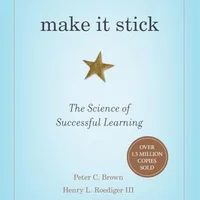
Make It Stick: The Science of Successful Learning — Brown, Roediger & McDaniel
As an Amazon Associate, we earn from qualifying purchases — at no extra cost to you.
A Simple Retrieval Practice Routine That Takes Minutes
You don't need a new system. You need one new habit.
After reading anything you want to remember — an article, a chapter, a report, a podcast transcript — close it. Wait a few minutes. Then write down everything you can recall, in your own words, without looking back. This is sometimes called the "blank page" method or free recall. The form doesn't matter. What matters is that retrieval happens before you check whether you were right.
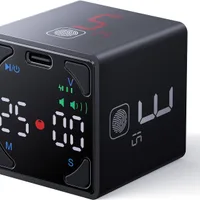
Ticktime Pomodoro Cube Timer (Black, USB-C)
As an Amazon Associate, we earn from qualifying purchases — at no extra cost to you.
For material you want to hold across weeks or months, the same principle applies at scale. Looking at your notes without first trying to reconstruct them is rereading by another name. Instead: cover your notes, write what you remember, then check. Flashcards used this way — generating the answer before flipping — are more effective than passively reviewing question-answer pairs. The question is whether you can produce the answer, not whether you can recognise it when it's shown to you.
A few variations that transfer well to daily life:
After a meeting or presentation: Within an hour, write down three things you want to retain. Don't look at your notes first. What you can't retrieve is what most needs review.
After a chapter or article: Summarise the main argument in two or three sentences, in your own words. If you're using a physical notebook, write your recall away from the source text rather than in the margins — the physical separation forces retrieval rather than copying.
After a week: Go through your reading list and try to recall the main idea of each item without re-reading. The gaps tell you exactly where to spend the next session.
If you want to extend this further, spaced repetition builds on the same logic across time — scheduling retrievals just before you're likely to forget. This compresses the number of review sessions needed to hold information long-term. An index-card system or a dedicated notebook with weekly review pages works well for most people before adding digital tools.

Kindle Paperwhite (12th Gen, 16GB, Black)
As an Amazon Associate, we earn from qualifying purchases — at no extra cost to you.
spaced repetition and long-term memory retention
How to Start Today
You don't need to change how you read. You need to change what you do in the five minutes after you close the book.
The next time you finish a chapter or article, close it. Open a blank page — physical or digital. Write down everything you remember. Aim for three minutes. Don't look back until you've written something.

Sony WH-1000XM5 Noise Cancelling Headphones
As an Amazon Associate, we earn from qualifying purchases — at no extra cost to you.
That uncomfortable feeling — the reaching, the uncertainty — is not a sign something's wrong. It's the learning happening. Recognition is effortless because the brain's already done the work. Retrieval is the work.
how to build a weekly review habit that actually sticks
One more thing worth carrying into practice: you don't need to be right. Research suggests that failed retrieval attempts can still improve later memory. The act of searching matters as much as finding the answer.
The deepest irony of rereading is that it asks very little of the brain — which is exactly why the brain returns very little. The method that feels most like learning is often the one doing the least.
To design your evolution as a learner means choosing retrieval over recognition — accepting the discomfort as the signal, not as the obstacle. That's the difference between consuming information and actually owning it.
What do you tend to do in the minutes after you finish reading something important? Drop your method in the comments — I'm genuinely curious whether the testing effect has already found its way into how you study.
Was this helpful?