Mindset· 13 min read
Savoring: The Skill of Making Good Moments Last

Savoring: The Skill of Making Good Moments Last
Think about the last genuinely good moment you had. A meal that was actually worth slowing down for. A conversation that clicked. Sunlight through a window at exactly the right angle.
Now: how long did you stay there?
Not physically — you were present. Mentally. A few seconds, maybe, before you were composing a text in your head, planning the next task, replaying something that happened three days ago.
For most people: not long. Good things pass. Rough moments grip attention; pleasant ones slip through like water through open hands. Savoring — the deliberate act of staying inside a good moment on purpose — is the trainable skill that changes that ratio. And "trainable" is the operative word.
This isn't a character flaw. It's wiring. Your brain was built to notice threat and problem, not to linger in comfort. But comfort isn't the goal here — a richer experience of what's already happening is. And it turns out to be something you can learn.
What the Research Actually Found
In 2007, psychologist Fred Bryant and Joseph Veroff published Savoring: A New Model of Positive Experience — a careful, somewhat dense book that introduced savoring as a distinct psychological construct. Not quite mindfulness. Not quite gratitude. Something more specific: the conscious effort to attend to, appreciate, and extend positive experience while it's still available.
Bryant and Veroff described three temporal forms. Anticipatory savoring: enjoying something before it happens, like genuinely looking forward to a trip rather than rushing toward it. In-the-moment savoring: consciously deepening pleasure while it's occurring. Reminiscent savoring: actively reliving a positive memory rather than letting it fade without notice. Each has a slightly different mechanism, but the core skill is the same — deliberate positive attention.
In 2012, Jose, Lim and Bryant published a daily diary study in the Journal of Positive Psychology following 101 participants over 30 days. They found that momentary savoring both mediated and moderated the effect of daily positive events on happy mood: in other words, savoring was part of the mechanism by which good events turned into good feelings. Two people could have similar days and still feel them differently, depending on how much they savored.
One honest caveat before going further: samples in savoring research are relatively small and largely self-reported, and follow-up periods are short. Effects appear real but modest. Savoring isn't a transformation — it's more like a coefficient. It doesn't change the events of your life, but it changes how much of them you actually absorb.
negativity bias why your brain focuses on what is wrong
Why Good Moments Tend to Disappear
There's a concept researchers call "hedonic adaptation" — arguably the most underrated term in everyday psychology. When something good becomes reliable, your brain reduces its attention allocation to it. The first sip of excellent coffee gets full processing power. The fiftieth gets background noise. New apartment, new job, new relationship — remarkable at first, furniture of life within months.
This isn't ingratitude. It's efficiency. Brains allocate attention based on novelty and threat, not on what's worth appreciating. Without deliberate intervention, positive experience gets processed at a steep discount — and before long, a genuinely good life can start to feel ordinary.
The fix isn't forcing yourself to feel more. It's building the habit of noticing before the moment fades. A slight pause. A conscious redirection. That's the foundation, and it requires less effort than it sounds.
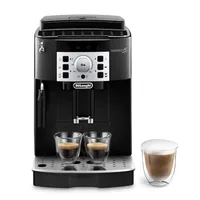
De'Longhi Magnifica S ECAM22.110.B Bean-to-Cup
As an Amazon Associate, we earn from qualifying purchases — at no extra cost to you.
The Strategies That Actually Work
Bryant and Veroff catalogued ten distinct "savoring strategies" — behaviors people use to extend good experience, mostly without realizing that's what they're doing. Here are five of them, in plain terms:
Sharing. Telling someone about a good experience while it's happening, or shortly after. Something about voicing the experience may deepen it.
Memory building. Taking a deliberate mental snapshot: closing your eyes for a moment and encoding specific details. It sounds faintly contrived, but many people find those moments easier to recall later.
Sensory sharpening. Narrowing your attention to a single channel. Just the taste. Just the texture. Just the sound. When you go macro on one sense, you get more of it — the full-bandwidth version rather than the compressed one.
Absorption. Stopping other cognitive activity entirely. Not multitasking. Not mentally narrating the experience. Just being inside it, briefly. Even thirty seconds of true absorption can change the quality of what gets encoded.
Behavioral expression. A small physical gesture — laughing, stretching, a quiet nod. It sounds performative, but expression may not only reflect pleasure; it can add to it.
Not all of these work for every person or every situation. The common thread is attentional: you're redirecting processing toward the positive instead of letting it drift into background.

Flow: The Psychology of Optimal Experience — Mihaly Csikszentmihalyi
As an Amazon Associate, we earn from qualifying purchases — at no extra cost to you.
The Habits That Undermine Savoring
Photographing experiences is a more complicated case than it looks. Research by Diehl, Zauberman and Barasch (Journal of Personality and Social Psychology, 2016) found that, across nine experiments, people who took photos during positive experiences usually enjoyed them more, because photo-taking increased their engagement. The benefit faded when the photography got in the way, such as with bulky equipment, and it reversed for unpleasant events. Separately, Henkel (Psychological Science, 2014) found that photographing museum objects, rather than just observing them, reduced memory for them.
So the evidence doesn't say "stop taking photos." The takeaway is narrower: photography helps when it keeps you engaged and hurts when it replaces attention. If you notice you're framing the shot instead of tasting the meal, that's your cue to put the phone down.
Rumination has a similar effect, but subtler. If you're in a good moment while simultaneously running a mental commentary — about whether you deserve it, how long it'll last, what problem comes next — you're not savoring. You're monitoring. The skill is to notice when that commentary starts and gently drop it, the same way you'd set down something you're carrying.
It's also possible to overdo it. Deliberately trying to savor every moment can create a kind of performance pressure that kills the spontaneity the experience needs. A reasonable approach is to pick a few intentional moments per day rather than making it a constant effort.
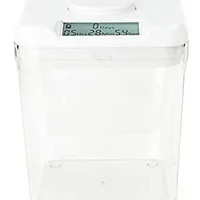
Kitchen Safe kSafe Time Locking Container
As an Amazon Associate, we earn from qualifying purchases — at no extra cost to you.
Savoring vs. Gratitude: A Useful Distinction
Gratitude is primarily retrospective and relational: you acknowledge that something good came from outside yourself — from another person, from circumstance, from luck. Research by McCullough, Emmons and Tsang (2002) found that a grateful disposition goes along with more positive affect, greater wellbeing and more prosocial traits, and with lower envy and materialism.
Savoring is about extending the temporal experience of something pleasant — not who gave it to you, but how fully you're taking it in. It can be entirely solitary. A long run. A page from a novel. An hour where your mind is genuinely where your body is.
| Savoring | Gratitude | |
|---|---|---|
| Time orientation | Present or immediate past | Retrospective |
| Focus | Your own experience of the moment | External source — person, circumstance, luck |
| Can be fully solitary | Yes | Usually has a relational element |
| Core mechanism | Prolonged attention and absorption | Acknowledgment and appreciation |
If you already keep a gratitude journal and feel like something's missing, it might be because you're recording good events without staying inside them long enough to actually feel them. Recording is not the same as absorbing.
best gratitude journals 2026

The Good Life — Robert Waldinger & Marc Schulz
As an Amazon Associate, we earn from qualifying purchases — at no extra cost to you.
A 5-Minute Daily Practice
This practice doesn't require any new tools or extra time — just a slight change in where your attention goes, applied consistently.
1. Choose your moment in advance. Each morning, identify one thing likely to happen today that you'd normally enjoy but rush through: a meal, a walk, a phone call with someone you actually like talking to. Set a quiet intention to meet it differently when it arrives.
2. Use sensory sharpening when it comes. Pick one channel — taste, texture, sound, light — and narrow your attention to it for thirty seconds. Not longer. Just enough to go from wide-angle to macro.
3. Write one line afterward. Not a journal entry. One sentence. "The walk was good this morning." "The light at 4pm was strange and worth noticing." This brief memory-building act is one of the strategies Bryant and Veroff describe — the idea is that it closes the loop between experience and recall.
4. Choose one moment per week to leave unphotographed. No frame, no upload. Let it exist only in memory. This is an experiment, not a rule: compare how it feels against your current habit.
5. Tell someone a small thing. Not a highlight — a small thing. "The walk was actually good." "Lunch was better than expected." Sharing is one of the strategies Bryant and Veroff describe, and finding words for a good experience plausibly makes you process it more fully.

Kindle Paperwhite (2024, 16GB)
As an Amazon Associate, we earn from qualifying purchases — at no extra cost to you.
The Part That Doesn't Get Said Enough
If the goal is a genuinely intentional life, then designing how you take in what's already good isn't soft or optional — it's part of the structure. Design Your Evolution doesn't mean only solving problems or building toward the next thing. It also means building the capacity to actually receive what you've already worked for — and that's a skill, not a given.
The research on savoring is modest. Effects are real, not large. No single study should carry too much weight. What it does consistently suggest is that some portion of your daily experience — the part that registers, the part you carry forward — is responsive to attention. And attention is one of the few things in a day you actually have some say over.
That's the trainable part. Not how many good things happen, but how much of what happens you let yourself keep. You don't need a retreat or a new routine — just thirty seconds and the decision to actually be somewhere you already are.
What's one small thing that happened today that you moved past too quickly?
Was this helpful?